
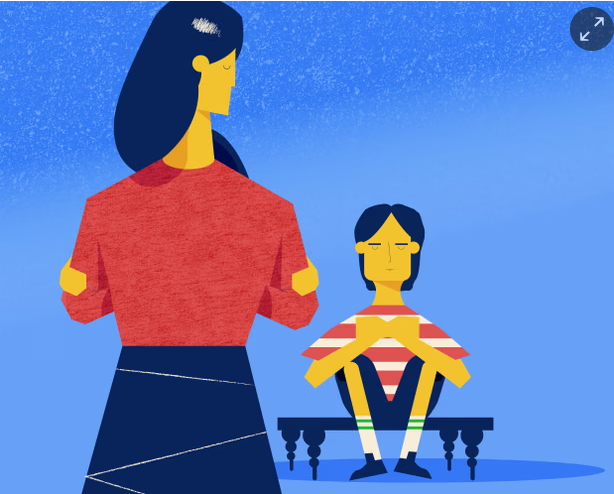

外刊阅读《How do I support my 11-year-old autistic son》
完形填空(一)
Three months ago, I came out of rehab after years of drinking. My son, who is 11 and autistic, had seen me at my 1 — drunk, angry, and lost. Those memories still make me feel deeply 2.
When I was drinking, he often tried to stop me by 3 the bottles. He believed he was the only one who could keep me safe. I’ve told him again and again that the only person who can stop me is 4.
Now I’m sober, and he’s living with me again after staying with his father for a few months. The trust between us is slowly 5, but I can still feel his 6. He watches everything I do, afraid that I might start drinking again.
I try to set 7 and show him that I’m reliable. It would be easy to give in to his demands, but I know that’s not healthy for either of us. As a parent, I must be calm and 8, even when guilt eats at me.
Our family has been referred to local support services, but while we wait, I often feel lost about how to 9 to him. I don’t want to ignore the past, yet I don’t want to 10 him either.
Experts say children need to feel safe. During my drinking years, my son lived in a world full of 11, and that fear doesn’t disappear overnight. So instead of making promises, I now try to show him that life is 12 — that I keep routines, stay sober, and spend time with him.
Sometimes, we talk while walking or cooking together — moments when the pressure to “talk seriously” isn’t there. I’ve learned that healing takes 13, patience, and honesty.
I know the road ahead won’t be 14, but as long as I stay sober and keep showing love, I believe we’ll both find peace and 15 again.
选择题:
- best B. lowest C. happiest D. calmest
- proud B. curious C. ashamed D. surprised
- hiding B. collecting C. throwing D. removing
- him B. myself C. his father D. my doctor
- breaking B. ending C. rebuilding D. disappearing
- anger B. anxiety C. excitement D. pride
- plans B. rules C. examples D. boundaries
- consistent B. silent C. strict D. hopeful
- listen B. talk C. apologize D. write
- upset B. confuse C. control D. ignore
- comfort B. peace C. unpredictability D. confidence
- different B. easy C. perfect D. normal
- time B. talent C. strength D. rules
- short B. clear C. smooth D. long
- hope B. trust C. help D. silence
完形填空(二)
After I stopped drinking, I wanted nothing more than to rebuild my relationship with my son. But I quickly learned that saying “I’m better now” wasn’t 1.
My son doesn’t trust words easily. He has seen 2 promises before — apologies followed by broken commitments. So this time, I decided to let my 3 speak louder. I keep a regular routine: breakfast together, homework time, bedtime stories.
Because of his autism, change and unpredictability make him 4. He likes to know what’s going to happen next. So when I’m late or do something unexpected, he becomes tense and 5.
At first, I thought giving him control might make him feel 6, but soon I realized that letting him decide everything wasn’t helping. It made him more 7, not less. That’s when I started setting gentle but clear limits — reminding him that I’m the parent and that he’s safe.
We now try to talk more naturally. Mealtimes or short walks are the best moments; sitting face to face feels too 8 for him. Sometimes, instead of speaking, he writes me short notes. It’s his way of 9, and I respect that.
Slowly, we’re finding a new balance. I tell him that no topic is 10, that he can always talk to me — even about the hardest things.
It isn’t easy, but I’ve learned that recovery isn’t just about quitting alcohol. It’s about rebuilding 11, both his and mine. My job now is to show him, not tell him, that I’m 12.
When I see him laugh again, even for a moment, I know we’re 13. Healing isn’t fast; it’s made of small 14 steps. But for the first time in years, I feel there’s a future where both of us can feel 15.
选择题:
1.A. enough B. true C. fair D. safe
2.A. broken B. beautiful C. real D. empty
- A. stories B. feelings C. actions D. questions
4.A. confident B. anxious C. bored D. curious
5.A. withdrawn B. calm C. excited D. cheerful
- A. weaker B. older C. safer D. taller
7.A. demanding B. happy C. independent D. relaxed
8.A. intense B. natural C. distant D. peaceful
9.A. apologizing B. expressing C. listening D. agreeing
10.A. difficult B. funny C. off-limits D. easy
11.A. trust B. habits C. dreams D. hope
12.A. sorry B. sober C. ready D. honest
13.A. moving backward B. standing still C. moving forward D. giving up
14.A. silent B. simple C. uncertain D. final
15.A. trapped B. proud C. whole D. alone
完形填空(三)
During my worst drinking days, my son often stayed with his father. He told me later he felt safer there. That hurt, but I understand. For years, my world was full of 1, and his was full of fear.
Now that I’m sober, I want to be a steady part of his life again. His father has been 2, which helps. Still, my son sometimes says, “What if you start drinking again?” It’s a fair 3, and I tell him the truth — I work every day to stay sober, and I have help from my AA group.
He still checks the fridge, watches my behavior, and asks questions that sound more like 4. I remind myself that this is not control; it’s his way of feeling 5.
Experts say that children who live with addiction often carry guilt. My son once told me he thought it was his 6 I drank. Hearing that broke my heart. I told him that my addiction was my responsibility, not his.
Now, we are learning together — how to 7, how to set boundaries, how to talk without fear. I’ve realized that healing a child’s heart takes more than love; it takes 8.
Sometimes, when he laughs while we play a game or walk to school, I catch a glimpse of the little boy he used to be — free, 9, and happy. Those moments remind me that my 10 matters.
Recovery is a journey. It’s not 11, but every day sober is a victory. I can’t erase the past, but I can build a 12 future — one filled with honesty and trust.
I hope one day he will look back and see not a broken parent, but someone who 13 to change. Someone who showed him that even when things seem lost, love and courage can 14 almost anything.
That’s what I want him to 15 from me.
选择题:
- laughter B. confusion C. peace D. silence
- distant B. supportive C. strict D. upset
- secret B. memory C. question D. promise
- warnings B. orders C. compliments D. jokes
- powerful B. important C. safe D. special
- fault B. idea C. plan D. right
- forget B. rebuild C. hide D. share
- time B. advice C. freedom D. energy
- shy B. quiet C. innocent D. angry
- effort B. fear C. guilt D. wish
- finished B. straight C. easy D. dangerous
- brighter B. faster C. distant D. similar
- refused B. pretended C. chose D. forgot
- destroy B. change C. heal D. hide
- expect B. learn C. demand D. forget
完形填空(一)
答案: B C D B C B D A B A C A A C B
解析:
- lowest — 语义为“最低谷”,描述人生最低点。
- ashamed — 对过去感到羞愧。
- removing — 移走瓶子以阻止饮酒。
- myself — 表明只有“我自己”能停止。
- rebuilding — 重建信任。
- anxiety — 儿子焦虑的情绪。
- boundaries — 建立界限。
- consistent — 一致的行为给孩子安全感。
- talk — 语境为“不知道如何和他交谈”。
- upset — 不想让他难过。
- unpredictability — 描述过去生活充满不确定。
- different — 表示“事情变得不一样了”。
- time — 康复与信任需要时间。
- smooth — 前进的道路不平坦。
- trust — 最终目标是重建信任。
完形填空(二)
答案: A A C B A C A A B C A B C B C
解析:
- enough — 仅仅说“我变好了”还不够。
- broken — 过去有许多破碎的承诺。
- actions — 行动胜于言辞。
- anxious — 自闭症孩子怕变化。
- withdrawn — 紧张时退缩。
- safer — 给他安全感。
- demanding — 变得更有控制欲。
- intense — 面对面交流让他紧张。
- expressing — 表达自己。
- off-limits — 没有话题被禁止。
- trust — 重建信任。
- sober — 表明戒酒状态。
- moving forward — 朝着前进方向努力。
- simple — 小而简单的步伐构成康复。
- whole — 感到完整。
完形填空(三)
答案: B B C A C A B A C A C A C C B
解析:
- confusion — 生活充满混乱。
- supportive — 父亲给予支持。
- question — 儿子提的疑问。
- warnings — 提问像是在提醒。
- safe — 让他感到安全。
- fault — 认为是自己的错。
- rebuild — 一起重建关系。
- time — 治愈需要时间。
- innocent — 天真无邪。
- effort — 努力很重要。
- easy — 旅程不容易。
- brighter — 更光明的未来。
- chose — 选择改变。
- heal — 爱与勇气能治愈。
- learn — 想让儿子从中学习。
语法填空(一)
When I came out of rehab, I felt both free and terrified. My 11-year-old son, who is autistic, had witnessed me __1__ (lose) control again and again. He used to hide bottles, believing that if he removed them, I would stop drinking.
I told him many times that only I could stop myself, yet by then, he had already learned to be the one __2__ (protect) me. That burden should never have been his.
After months of therapy, I’m slowly regaining his trust. He has returned home, __3__ (move) back in when school started. Every morning, I remind myself that consistency means more than promises. It’s through actions, not words, __4__ my son learns to feel safe again.
Still, he watches me closely, as if one wrong step might send me backward. His vigilance, though exhausting, reminds me how deeply my drinking had __5__ (shape) his world.
Sometimes, when I speak gently and keep my word, I can see him start to relax — a small victory that proves change __6__ (be) possible.
I’ve referred our family for support, yet help hasn’t arrived. In the meantime, I must learn to speak with honesty, but without overloading him with guilt. After all, recovery isn’t a single act; it’s a process, one that demands courage, humility, and time — none of which I can afford to __7__ (rush).
I know trust, once broken, cannot simply be rebuilt by saying “sorry.” It must be lived, one day at a time, until the proof of sobriety becomes impossible to __8__ (deny).
Maybe one day, when he looks back, he’ll see not the woman who fell, but the one who kept __9__ (rise), no matter how many times she failed.
And perhaps that will be enough to make him believe that love, when truly fought for, can be __10__ (redeem).
语法填空(二)
My son’s anxiety often shows up in small ways — questions asked twice, routines checked again and again, lights turned off in a certain order. To outsiders, it might seem __1__ (excess), but I know it’s how he manages the chaos inside.
Because of his autism, unpredictability makes him tense. For years, I had been the source of that unpredictability — disappearing into bottles and reappearing with shame. It is little wonder he still finds it hard to trust that stability can __2__ (last).
So now, every action I take is deliberate. If I say I’ll be home by six, I __3__ (arrive) by six. If I can’t, I call ahead. These small, predictable details are not trivial; they are, in fact, the architecture __4__ which trust is rebuilt.
We talk sometimes, but always in motion — walking side by side, __5__ (avoid) eye contact that feels too intense. Silence no longer frightens me; I’ve learned that words, when forced, only push him further away.
He once wrote a note that said, “I like it when you keep your promises.” I keep it folded in my wallet — a reminder that redemption, once __6__ (earn), must be protected with care.
I used to think parenting meant always having the answers. Now I know it’s about learning to stay steady __7__ the storm, even when you don’t know where it’s going.
Some nights, when he finally falls asleep without checking on me, I realize we’ve come further than I __8__ (dare) hope.
There are setbacks, of course. Healing is rarely linear; sometimes, I fall into guilt so deep that I fear he’ll never forgive me. But then he smiles — cautious, yet real — and I remember that progress can __9__ (measure) not in leaps, but in breaths shared without fear.
And maybe that’s what faith really is: the quiet belief that love, once wounded, can still be made __10__ (whole).
语法填空(三)
During my darkest days, my son stayed with his father. He told me later that it was the only place he felt safe. Hearing that was painful, though I knew he was right.
When he moved back, I feared he might never look at me the same way again. To my surprise, he was cautious but willing — willing to give me a chance I hardly __1__ (deserve).
The hardest part has been accepting that I cannot erase his fear by __2__ (promise) that I’ll never drink again. He has heard those words before. Instead, I focus on routines — breakfast together, predictable evenings — so that safety becomes something he can feel rather than __3__ (imagine).
Sometimes, he still checks on me, peeking into the kitchen or sniffing my glass. I no longer see it as mistrust, but as evidence that he’s trying to believe again, though belief cannot be __4__ (command).
There are days when guilt threatens to drown me. On such days, I remind myself that self-forgiveness is not __5__ same as forgetting.
His father remains supportive, which helps more than he probably realizes. Recovery, I’ve learned, isn’t just about abstinence; it’s about learning __6__ (separate) your healing from someone else’s pain.
If my son needs space, I give it. If he needs reassurance, I offer it — but I no longer try to fix everything for him. That’s his journey, just as mine is to stay __7__ (steady).
One night, as we sat watching a film, he leaned on my shoulder — just for a moment, but long enough for me to understand that we were both __8__ (heal), in our own quiet ways.
The road is still long, and fear still visits. But this time, I don’t hide. I meet it with calm, knowing that love, when practiced daily, is stronger than __9__ (any) past mistake.
And perhaps that’s the real miracle — not being perfect, but __10__ (choose) to keep trying, no matter what.
答案与解析
【一、The Long Road Back】
答案:1. losing 2. to protect 3. having moved 4. that / through which 5. had shaped 6. is 7. rush 8. deny 9. rising 10. redeemed
解析:
① 动名词作宾语;had witnessed me losing control(宾补结构)。
② 不定式表目的;learned to be the one to protect me。
③ 独立主格结构。
④ 非限制性定语从句,强调“通过行动而非言语”。
⑤ 过去完成时表示“在那之前已经影响”。
⑥ 一般现在时表普遍真理。
⑦ afford to do sth. 固定搭配。
⑧ make… impossible to deny 不定式作后置定语。
⑨ keep + V-ing 表持续努力。
⑩ can be redeemed 被动语态。
【二、Between Fear and Faith】
答案:1. excessive 2. last 3. arrive 4. upon / on 5. avoiding 6. earned 7. through 8. dared 9. be measured 10. whole
解析:
① excessive 作形容词修饰 it。
② can + 动词原形 last。
③ 祈使句型;习惯现在时。
④ architecture upon which… 介词 + 关系代词引导定语从句。
⑤ 现在分词作状语。
⑥ 过去分词作后置定语,once earned。
⑦ 固定搭配 stay steady through the storm。
⑧ 虚拟语气(than I dared hope)。
⑨ 被动语态 measure → be measured。
⑩ made + adj. 构成系表结构。
【三、Learning to Let Go】
答案:1. deserved 2. promising 3. imagine 4. commanded 5. the 6. to separate 7. steady 8. healing 9. any 10. choosing
解析:
① hardly + 过去分词 deserved,虚拟语气含义。
② by + 动名词。
③ can feel rather than imagine 并列结构。
④ belief cannot be commanded 被动语态。
⑤ 固定搭配 the same as。
⑥ about learning to separate… 不定式作宾补。
⑦ stay + adj. 结构。
⑧ 独立主格结构 both healing。
⑨ 比较级结构 stronger than any past mistake。
⑩ 动名词 choosing 作主语。
原文素材:
I am a recovering alcoholic and need advice on how to support my son, who is 11 and autistic. I am three months sober with the help of rehab and AA, but my drinking became heavy over the last two years (I was sober for the first six years of my son’s life).
我是一名正在康复的酗酒者,需要关于如何支持我 11 岁的自闭症儿子的建议。我已经戒酒三个月了,在康复中心和 AA 团体的帮助下,但我的饮酒在过去的两年里变得很严重(在我儿子生命的前六年里我都是戒酒的)。
Towards the end, my drinking was 24/7 and my son has sadly seen me out of control and desperately unhappy. He developed a sense of responsibility, that he was the only person who could stop me drinking (by physically removing bottles), which I feel utterly ashamed about. I have said to him many times that the only person who can stop me drinking is me.
在最后阶段,我几乎每天都在饮酒,我的儿子不幸地看到我失控和极度不快乐。他产生了一种责任感,认为只有他才能阻止我饮酒(通过物理移走瓶子),这让我感到非常羞愧。我多次对他说,唯一能阻止我饮酒的人是我自己。
He lived with his father for a few months (we divorced five years ago but he is supportive of my recovery) and moved back in with me when he started high school in September. The trust between us is slowly growing as he can see that I am not drinking and putting all my effort into getting better.
他与父亲住了几个月(我们五年前离婚,但他支持我的康复)然后在九月开始上高中时搬回来与我同住。随着他看到我没有喝酒,并全力以赴地改善自己,我们之间的信任正在慢慢建立。
My son is still hyper-vigilant and anxious about my safety. This means he is terribly controlling of my actions – partly because of his anxiety about my drinking, but also because he is autistic and anxious about anything unpredictable. I am working on confidence and boundaries; it would be easy to give in to his demands but this doesn’t feel right as a parent. It is hard as I also feel enormously guilty.
我的儿子仍然对我和我的安全过度警觉和焦虑。这意味着他对我的行为控制欲极强——部分原因是他对我饮酒的焦虑,但也因为他患有自闭症,对任何不可预测的事情都感到焦虑。我正在努力建立自信和界限;屈服于他的要求很容易,但作为父母,这感觉并不对。而且我也感到非常内疚。
I referred our family to Children’s Services while I was in rehab, and we are waiting for help for my son from our local substance abuse support service. In the meantime, I feel really at sea about how to talk to him. I don’t want to make him upset, but I don’t want to ignore the past either. How do we move forward?
我康复期间把家人推荐给了儿童服务,我们现在正在等待当地药物滥用支持服务为我们儿子提供帮助。与此同时,我真的很迷茫,不知道如何和他交谈。我不想让他难过,但也不想忽视过去。我们该如何前进?
Incredibly well done for realising you need help and getting it. You’ve asked me a very specific question: how to talk to your son and support him.
你意识到自己需要帮助并寻求了帮助,做得非常棒。你问我一个非常具体的问题:如何与你的儿子交谈并支持他。
I went to systemic psychotherapist Rebecca Harris, who is an addictions area manager in a London mental health trust, and has over twenty more than 20 years experience in this field. “Children need to feel safe,” she said. “Your son has gone through an unpredictable time when he couldn’t be sure you were able to keep him, or yourself, safe. He may feel worried about raising these issues with you now. Children tend to think things are their fault [the alternative, that it’s their parents’ fault, is too great a threat to their survival, so they turn the blame inwards]. Autism may exacerbate all of this.”
我咨询了系统心理治疗师丽贝卡·哈里斯,她是伦敦一家心理健康信托机构的成瘾区域经理,拥有 20 多年的相关经验。“孩子们需要感到安全,”她说。“你的儿子经历了一段不可预测的时期,他无法确定你是否能保证他的安全,或者你自己的安全。他现在可能担心和你提出这些问题。孩子们往往会认为事情是自己的错[如果认为是父母的错,那对他们的生存来说是一个太大的威胁,所以他们会把责任转向自己]。自闭症可能会加剧这一切。”
Harris also said that “it’s not unusual for people in active addiction to make apologies and promises which they may not be able to keep. This means it can be hard for loved ones to know what to believe. As well as boundaries, it’s really important to be consistent and show your son that things are better, rather than just telling him.”
哈里斯还说:“对于正在沉迷的人来说,做出无法兑现的道歉和承诺并不罕见。这意味着亲人很难知道该相信什么。除了界限之外,保持一致并让你的儿子看到事情变得更好,而不仅仅是告诉他,这非常重要。”
Concentrate on him settling in at school and establish a good routine. Then introduce the idea that no subject is off the discussion table (if that is indeed the case). Mealtimes can be a good time to talk as can side-by-side activities such as walking or driving because there is minimal eye contact, which some people find too intense. Maybe there’s an activity you and your son like doing together? Don’t think “we must talk”, think about opportunities for talking and see if they happen. Harris also wondered about your son’s preferred method of communication. It might not be talking; it could be written, or it could be a mixture of both.
专注于他在学校的适应,并建立良好的日常规律。然后引入一个想法,即没有哪个话题不能被讨论(如果确实如此)。用餐时间可以是一个交谈的好时机,同样,并肩进行的活动,如散步或开车,也是一个好时机,因为这样接触到的眼神交流最少,有些人可能会觉得过于强烈。也许有一个你和儿子都喜欢一起做的活动?不要想着“我们必须交谈”,而是考虑交谈的机会,看看它们是否会发生。哈里斯还想知道你儿子偏好的沟通方式。这可能不是谈话;可能是书面交流,或者两者兼而有之。
Harris and I wondered if your son’s safe place apart from his home with you is with his dad? It’s important for him to know that, and for you not to take it personally if that’s where he wants to go at times. It doesn’t mean you’ve failed if he does, this is a process and it won’t be linear.
哈里斯和我想知道,除了和您在一起的家之外,您儿子是否觉得和爸爸在一起的地方更安全?让他知道这一点很重要,而且如果您有时想让他去那里,请不要把它当作个人攻击。如果他这样做,并不意味着您失败了,这是一个过程,不会一帆风顺。
I’m pleased you’ve got ongoing support from addiction services. We weren’t sure that local substance abuse services would be able to help your son (they usually deal with adults, but might have someone who can support him). These groups may also be helpful: Al-Anon Family Groups (Alateen); National Association for Children of Alcoholics (Nacoa); National Autistic Society.
我很高兴您从戒毒服务中得到了持续的支持。我们不确定当地的药物滥用服务能否帮助您的儿子(他们通常处理成年人,但可能有人可以支持他)。以下这些团体也可能有所帮助:匿名家庭团体(匿名青少年);酗酒儿童全国协会(Nacoa);全国自闭症协会。
Harris said, “You need to separate your needs and your son’s. Make sure you’re not making him feel better to make yourself feel better – to absolve yourself – because you can’t do that through your son. You can better focus on what he needs if you have good support yourself.”
哈里斯说:“您需要区分自己的需求和您儿子的需求。确保您不是为了让儿子感觉好一些而让自己感觉好一些——为了自我宽恕——因为您不能通过儿子来实现这一点。如果您自己有良好的支持,您就能更好地关注他的需求。”
